

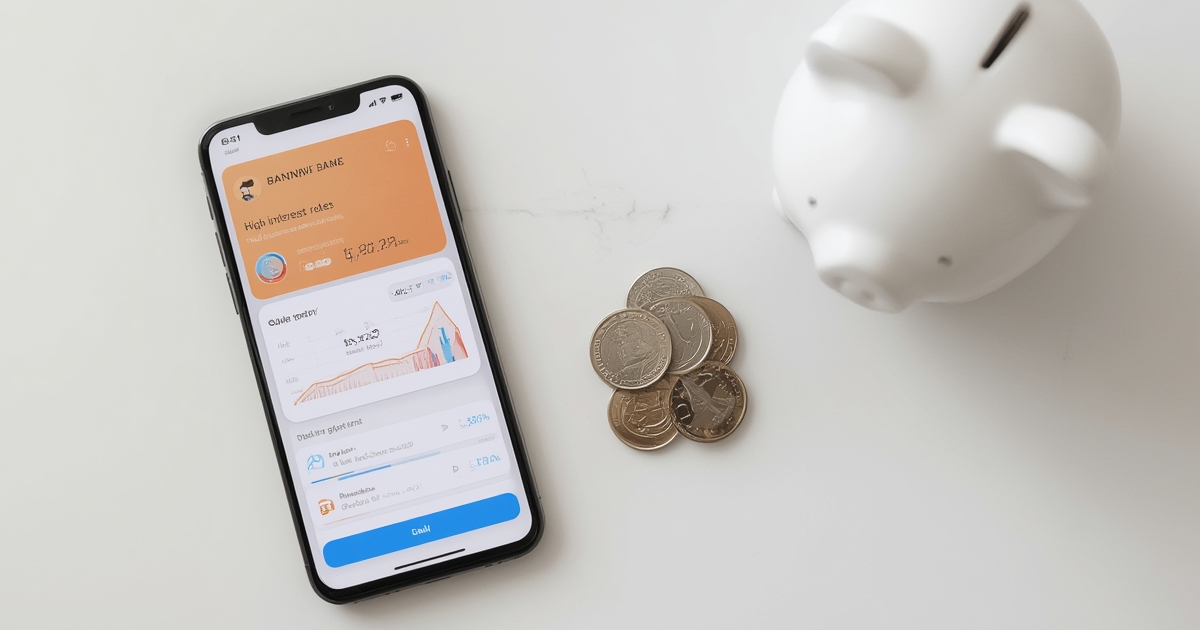
Imagine watching your money sit idle while the cost of living keeps climbing. The good news is that a well‑chosen high‑yield savings account can turn that idle cash into a modest, yet powerful, growth engine. By harnessing the magic of compound interest and the higher rates offered by online banks, you can unlock your savings potential without taking on market risk. In this guide we’ll break down exactly how high‑yield savings works, which accounts deliver the best returns, and how to weave them into a solid wealth‑building strategy.
Understanding High‑Yield Savings: How It Works
What Makes an Account “High‑Yield”?
A high‑yield savings account is simply a deposit account that offers an annual percentage yield (APY) significantly above the national average for traditional brick‑and‑mortar banks. While the Federal Reserve’s benchmark for a typical savings rate hovers around 0.05%‑0.10%, many online institutions post APYs of 4%‑5% or higher. The higher yield is possible because these banks have lower overhead costs and can pass the savings on to customers.
- Higher APY = Faster compounding.
- Usually no monthly maintenance fees.
- Often require only a modest minimum balance, if any.
How Compound Interest Accelerates Your Balance
Compound interest means you earn interest on both your principal and the interest that’s already been added to your account. The formula for future value (FV) with daily compounding is:
FV = P × (1 + r/365)^(365 × t)
Where P is the principal, r is the annual rate (as a decimal), and t is the number of years. A $10,000 deposit at 4.50% APY grows to $12,185 after five years, compared with $10,510 in a 0.05% account—a 15% increase in purchasing power.
Choosing the Right High‑Yield Savings Account
Key Factors to Evaluate
Not all high‑yield savings accounts are created equal. When comparing options, focus on the following criteria:
- APY and compounding frequency: Daily compounding yields the most growth.
- Fees and minimum balance requirements: Even a small monthly fee can erode returns.
- FDIC insurance: Ensure the institution is FDIC‑insured up to $250,000.
- Ease of access: Look for mobile apps, online transfers, and ATM networks if you need occasional cash.
- Customer service and reputation: Check reviews and BBB ratings for reliability.
Comparing Top High‑Yield Savings Accounts
| Bank / Platform | APY (as of 2024) | Minimum Balance | Monthly Fees | Best For |
|---|---|---|---|---|
| Ally Bank | 4.30% | $0 | $0 | All‑purpose savings & emergency fund |
| Marcus by Goldman Sachs | 4.55% | $0 | $0 | Higher balances, no‑fee structure |
| Discover Online Savings | 4.15% | $0 | $0 | Integration with checking & credit cards |
| American Express National Bank | 4.40% | $0 | $0 | Strong customer support |
| Traditional Credit Union (e.g., Navy Federal) | 3.80% | $5,000 | $0 | Members seeking community banking |
Step‑by‑Step Account Selection Checklist
- Confirm FDIC coverage and read the fine print on insurance limits.
- Record the advertised APY and verify the compounding schedule (daily is ideal).
- Check for hidden fees—maintenance, transfer, or inactivity fees.
- Test the mobile app’s usability and the speed of ACH transfers.
- Read recent customer reviews for service reliability.
Maximizing Returns with Smart Savings Strategies
Automate Contributions for Consistent Growth
Automation removes the “I’ll remember later” excuse. Set up a recurring ACH transfer from your checking account on payday. Even $100 a month at a 4.30% APY compounds to $6,300 after five years, versus $5,800 without compounding.
Layer Your Savings: Tiered Buckets
Divide your high‑yield savings into distinct buckets to match liquidity needs and risk tolerance:
- Emergency Fund (3‑6 months of expenses): Keep this in a high‑yield account with instant access.
- Short‑Term Goals (1‑3 years): Use the same account but earmark funds for vacations or a down‑payment.
- Long‑Term “Parking” Fund (3‑5 years): Consider a hybrid approach—part high‑yield savings, part short‑term CD for a slightly higher rate.
Take Advantage of Referral Bonuses
Many online banks offer cash bonuses for referring friends. While the bonus is modest (usually $50‑$100), it’s a free boost to your balance that immediately begins compounding at the high‑yield rate.
Integrating High‑Yield Savings into a Broader Wealth‑Building Plan
Emergency Fund vs. Investment Goals
A solid emergency fund in a high‑yield savings account is the foundation of any financial plan. Once you have 3‑6 months of living expenses safely parked, you can allocate additional cash to higher‑risk, higher‑return vehicles such as index funds, Roth IRAs, or taxable brokerage accounts.
Tax Considerations
Interest earned in a high‑yield savings account is taxable as ordinary income. To minimize tax impact:
- Use a joint account if you’re in a lower tax bracket.
- Consider placing the account within a tax‑advantaged vehicle, such as a Health Savings Account (HSA), if eligible.
- Track interest on a spreadsheet to ensure accurate reporting on your Form 1040.
Rebalancing Between Savings and Investments
As your net worth grows, periodically review the proportion of cash in high‑yield savings versus market‑based assets. A common rule of thumb is to keep 5%‑10% of total assets in liquid, low‑risk accounts for flexibility, while the remainder can be invested for growth.
Common Pitfalls and How to Avoid Them
- Chasing “Too‑Good‑to‑Be‑True” Rates: Extremely high APYs may be promotional and revert after a few months. Read the rate‑reset clause.
- Ignoring Inflation: Even a 4.5% APY can be outpaced by 5% inflation, eroding real purchasing power over time. Pair savings with modest inflation‑beating investments.
- Leaving Money in Low‑Yield Accounts: Transfer idle balances from traditional banks to high‑yield accounts as soon as possible.
- Overlooking FDIC Limits: Keep each institution under $250,000 to stay fully insured.
- Missing Transfer Windows: Some banks process ACH transfers only on business days; plan for timing if you need cash quickly.
Quick Action Checklist
- Switch any idle $1,000+ from a traditional savings to a high‑yield account.
- Set up automatic monthly transfers equal to at least 10% of net income.
- Review APY rates quarterly and reallocate if a better offer appears.
- Track earned interest and incorporate it into your annual tax filing.
Measuring Success
Use a simple spreadsheet to monitor:
- Starting balance.
- Monthly contributions.
- APY (updated if the bank changes the rate).
- Ending balance and total interest earned.
Seeing the numbers grow each month reinforces the habit and highlights the power of high‑yield savings.
Future Outlook for High‑Yield Savings
Interest rates are influenced by Federal Reserve policy. In a rising‑rate environment, high‑yield savings accounts tend to adjust more quickly than traditional banks, offering a defensive hedge against inflation while preserving capital.
Key Takeaways
- High‑yield savings accounts provide a safe, liquid place to earn above‑average returns.
- Prioritize APY, fee structure, and FDIC insurance when selecting an account.
- Automate contributions and use tiered buckets to align liquidity with goals.
- Integrate the account into a broader wealth‑building plan, balancing cash reserves with growth‑oriented investments.
Frequently Asked Questions
How can I quickly improve my credit score while maintaining a high‑yield savings account?
Pay all bills on time, keep credit utilization below 30%, and avoid opening multiple new accounts in a short period. Your savings account won’t affect your credit score directly, but a strong credit profile can qualify you for better loan rates, freeing up more cash to funnel into high‑yield savings.
What is the safest way to invest $1,000 if I already have an emergency fund?
Consider a diversified low‑cost index fund (e.g., an S&P 500 ETF) within a tax‑advantaged account like a Roth IRA. This offers market exposure with minimal fees while preserving the tax‑free growth potential.
Are high‑yield savings accounts suitable for long‑term wealth building?
They are excellent for short‑ to medium‑term goals and as a cash buffer. For long‑term growth, combine them with equities, bonds, or real‑estate investments that historically outperform inflation over decades.
Do I need to worry about FDIC insurance if I split my money across multiple banks?
Yes. The FDIC insures up to $250,000 per depositor, per insured bank. If you have more than that, spread the excess across different institutions to keep the entire amount protected.
Can I use a high‑yield savings account for my children’s college fund?
Yes, as a short‑term parking place while you decide on a 529 plan or other education‑specific vehicle. Keep the funds liquid in a high‑yield account until you’re ready to transfer them to a tax‑advantaged college savings plan.